CO2 is not
one treatment.
Bolus Med Spa uses fractional CO2 resurfacing to improve selected concerns involving texture, wrinkles, photodamage, acne scars, pores and crepey skin.
Some patients need a lighter approach. Others are seeking deeper correction. We do not choose treatment intensity from a preset menu. We start with the concern and build the plan from there.
Light correction.
Moderate correction.
Deeper correction.
CO2 treatment can be adjusted across a wide range of intensities. That flexibility is exactly why candidacy and recovery planning matter.
Start with the concern.
These are common reasons patients begin exploring CO2 resurfacing. The appropriate treatment may still be CO2, HALO, MOXI, Erbium, RF microneedling or another option.
Fine Lines + Wrinkles
Especially etched textural lines that are present even when the face is at rest.
Explore Fine Lines + WrinklesAcne Scars
Fractional CO2 may be considered for selected atrophic acne scars, but scar morphology and pigment risk matter.
Explore Acne ScarsSun Damage
When photodamage overlaps with rough texture, fine lines and visible skin aging.
Explore Sun DamageTexture + Pores
Selected patients may benefit from resurfacing when roughness and pore appearance are part of the concern.
Crepey Skin
Fractional resurfacing may be considered when fine textural change and collagen loss contribute to crepiness.
Explore Aging SkinI Am Not Sure
You do not need to choose the device before the consultation. Tell us what you want to change and we will help determine the appropriate treatment.
Text BolusControlled resurfacing. Controlled healing. Collagen remodeling.
Fractional CO2 creates microscopic treatment zones in the skin while leaving intervening tissue intact. The controlled injury initiates a wound healing response and remodeling process.
Resurface
CO2 energy can remove microscopic columns of damaged skin and create controlled resurfacing.
Remodel
Thermal effects surrounding the treatment zones contribute to collagen remodeling during healing.
Heal
Untreated tissue between fractional columns supports re-epithelialization and recovery compared with fully ablative resurfacing.
CoolPeel and corrective CO2 are not the same experience.
The CO2 platform can be used across different treatment intensities. The appropriate setting depends on the degree of correction desired and the recovery that is clinically appropriate.
CoolPeel Style Treatment
A lighter fractional CO2 approach may be used when the goal is more subtle resurfacing with less visible recovery.
Fractional CO2 Resurfacing
More corrective fractional treatment may be selected for deeper texture, etched lines, photodamage or acne scarring when greater downtime is acceptable.
Another Resurfacing Tool
HALO, Erbium, MOXI or RF microneedling may make more sense when the desired correction, skin type or downtime profile points away from CO2.
Corrective resurfacing is part of a plan, not just a laser appointment.
CO2 treatment intensity and treatment area affect the final investment. Exact pricing is confirmed before treatment after the appropriate resurfacing plan is selected.
Public Treatment Pricing
Standard patients pay the current treatment price based on the selected CO2 intensity, treatment area and treatment plan.
Your exact investment is reviewed before treatment so there are no surprises.
Apply Eligible Treatment Credit
Eligible Private Clients may apply available treatment credit toward qualifying CO2 resurfacing according to the current Private Client plan and treatment-credit rules.
This allows resurfacing to fit into a broader annual skin strategy rather than existing as an isolated procedure.
Explore Private ClientCorrect Then Maintain
A more corrective resurfacing treatment may be followed by lower-downtime maintenance such as BBL, MOXI, HydraFacial, professional skincare or another treatment selected around the skin's evolving needs.
The best laser is the one that matches the goal.
CO2 is one option within a larger resurfacing platform. Explore the adjacent treatments if your goals, skin type or downtime preference point in another direction.
Scar type changes the treatment plan.
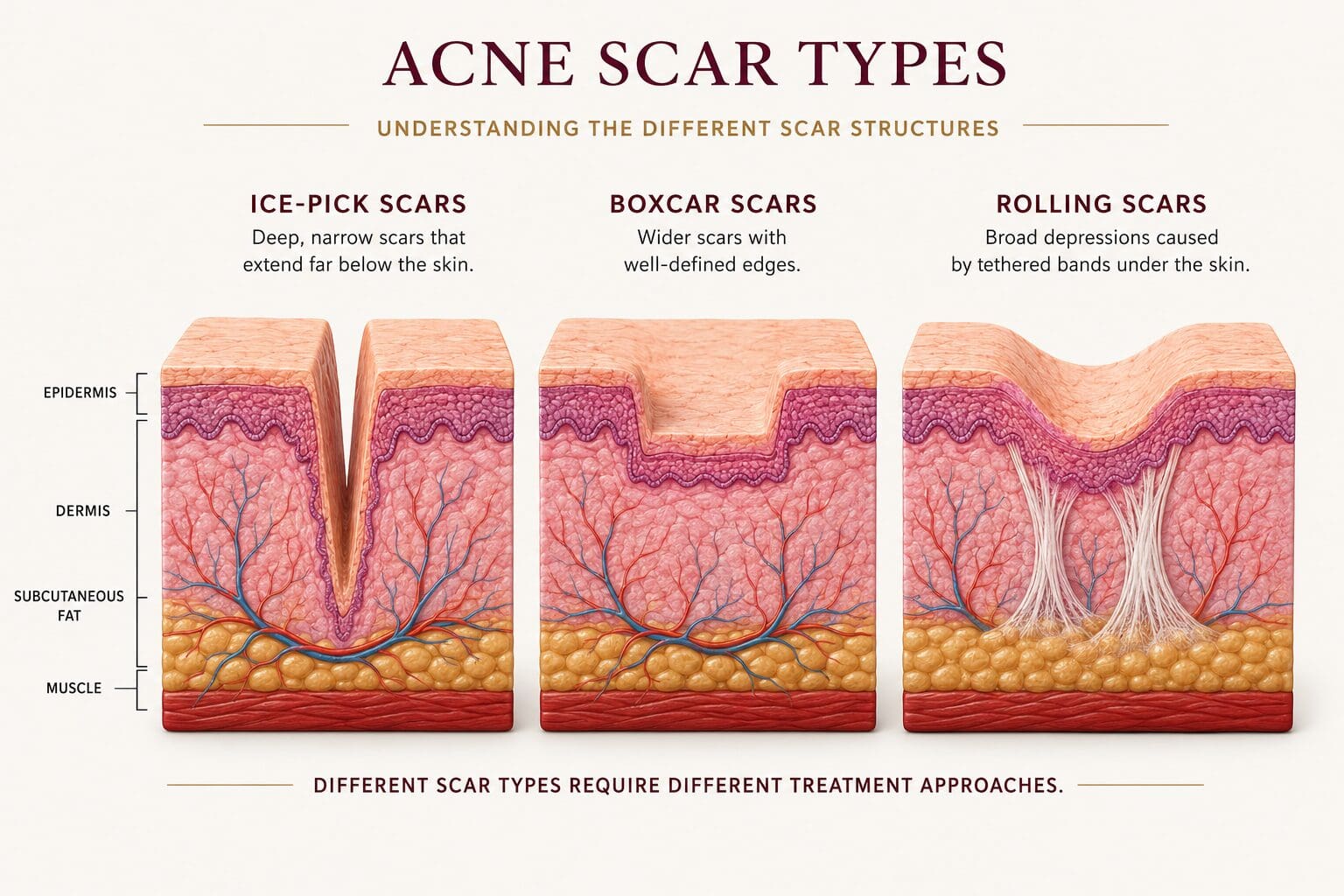
Acne scars are not one problem. Rolling scars, boxcar scars and ice pick scars have different architecture, which is why the best scar plan may combine several techniques rather than simply increasing laser intensity.
Identify The Scar
Rolling, boxcar and ice pick scars can behave differently. Scar morphology helps determine whether resurfacing, focal treatment, release of tethering or combination therapy makes sense.
Explore Acne Scar Treatment
Release Tethering When Appropriate
Some rolling or tethered scars are pulled downward by fibrous attachments. In selected patients, subcision may address tethering before or alongside resurfacing.
Explore Subcision
Treat Focal Deep Scars
Narrow deep scars may require focal treatment such as TCA CROSS rather than relying on broader resurfacing alone.
Explore TCA CROSSThe deeper the treatment, the more important the healing plan.
Corrective resurfacing deserves structured preparation, realistic downtime expectations and follow-up.
Evaluate
We review skin type, pigmentation history, prior procedures, medications, medical history, HSV history, healing factors and treatment goals.
Prepare
Pre-care may include sun avoidance, skincare adjustments, medication review and other measures based on treatment intensity and individual risk.
Treat
Treatment intensity is selected according to the problem being treated and the recovery profile that makes sense for the patient.
Heal
Redness, swelling, crusting, bronzing, peeling and visible healing can occur. Deeper treatments generally produce more visible downtime.
Follow Up
Aftercare, sun protection and appropriate follow-up help support healing and identify complications early.
CO2 requires respect for pigmentation biology.
Post-inflammatory hyperpigmentation is a meaningful consideration after ablative resurfacing.
Fitzpatrick skin type, recent sun exposure, history of melasma or PIH, treatment depth and aftercare can all influence risk. Patients with darker skin tones are not automatically excluded from every resurfacing option, but aggressive CO2 may not be the best first choice for every patient.
When pigment risk is substantial, another modality, lower treatment intensity, pretreatment strategy or staged approach may be more appropriate.
Patients with active infection, uncontrolled inflammatory skin disease, concerning lesions, certain healing disorders or other significant contraindications may need treatment deferred or redirected.
Resurfacing is sometimes one piece of the plan.
CO2 can improve texture and selected wrinkles, but it does not replace treatment for every component of facial aging or scarring.
Wrinkle Relaxers
Dynamic muscle-driven wrinkles may still require neuromodulator treatment even when the skin is resurfaced.
Explore Wrinkle RelaxersAcne Scar Procedures
Subcision, TCA CROSS, needling or other scar-specific procedures may be needed when scar morphology calls for more than resurfacing alone.
Explore Acne ScarsPigment Treatments
Brown spots, melasma and diffuse photodamage may require a separate pigment strategy rather than relying on CO2 alone.
Explore Sun DamageProfessional Skincare
Pre-care, barrier support and long-term skincare help protect the investment made in corrective resurfacing.
Explore Skin TreatmentsWhat does the evidence say about fractional CO2?
Fractional CO2 has a substantial body of literature for resurfacing and acne scarring, but outcomes depend on indication, treatment parameters, skin type and comparison treatment.
Fractional CO2 For Atrophic Acne Scars
Systematic reviews support fractional CO2 as an effective option for selected atrophic acne scars while also showing meaningful variability in protocols, outcomes and adverse effects across studies.
Search PubMed EvidenceCO2 Versus Needling Based Treatments
Comparative studies and reviews suggest that fractional CO2 may provide stronger scar improvement in some settings, while needling-based approaches may offer a more favorable pigment and downtime profile for selected patients.
Search PubMed EvidencePhotoaging + Texture
Fractional ablative resurfacing has been studied for photoaging, wrinkles and textural change, with improvement balanced against recovery time and adverse effect risk.
Search PubMed EvidencePost-inflammatory Hyperpigmentation
PIH remains an important consideration after fractional ablative treatment, particularly in patients with higher Fitzpatrick skin types or a history of pigment instability.
Search PubMed EvidenceWhat patients usually want to know before resurfacing.
What does CO2 laser resurfacing treat?
CO2 resurfacing may be used for selected concerns involving wrinkles, rough texture, photodamage, enlarged pore appearance, crepey skin and atrophic acne scarring. Candidacy depends on skin type, treatment history, pigment risk and the specific concern.
Is CoolPeel the same as CO2 laser resurfacing?
CoolPeel uses CO2 technology, but it generally refers to a lighter resurfacing approach designed around less thermal injury and reduced social downtime. More corrective fractional CO2 treatment may involve greater depth, thermal effect and recovery.
How much downtime should I expect?
Downtime varies substantially with treatment intensity. A lighter treatment may involve redness and short-term roughness, while deeper resurfacing can involve several days or more of swelling, crusting, peeling, bronzing and visible healing. Your expected recovery should be discussed before treatment.
Does CO2 hurt?
Comfort measures depend on treatment intensity. Topical anesthetic and other measures may be used for more corrective treatment. Patients may experience heat, stinging or discomfort during and after treatment.
How many CO2 treatments will I need?
That depends on the problem being treated and the intensity of each session. A more corrective session may be performed less frequently, while lighter treatments may be repeated as part of a series or maintenance strategy.
Can CO2 treat acne scars?
Yes, fractional CO2 can improve selected atrophic acne scars. It is not the correct treatment for every scar. Rolling, boxcar and ice pick scars can respond differently, and some patients benefit from combination treatment such as subcision, TCA CROSS or needling-based procedures.
Can CO2 be used on darker skin tones?
Skin of color requires careful risk assessment because PIH can occur after ablative resurfacing. Treatment may still be possible in selected patients, but a different modality, lower intensity or pretreatment strategy may be more appropriate depending on skin type and pigment history.
Is CO2 better than HALO?
Not necessarily. They are different resurfacing technologies with different depth, recovery and treatment profiles. The better option depends on whether the dominant concern is pigment, texture, wrinkles, scars or a combination and how much downtime is acceptable.
Is CO2 better than RF microneedling?
They solve overlapping but different problems. CO2 is an ablative resurfacing treatment. RF microneedling creates controlled dermal injury through needles and radiofrequency without ablating the surface in the same way. Skin type, laxity, scarring, texture and downtime goals influence the choice.
When should I not have CO2 treatment?
Active infection, uncontrolled skin inflammation, concerning lesions, recent significant sun exposure, certain healing disorders, some medications, pregnancy-related considerations and other medical or skin factors may require treatment to be deferred or changed. A clinical assessment is required.
What should I use after CO2?
Aftercare depends on treatment depth. Patients are generally given specific cleansing, barrier support, sun protection and product-reintroduction instructions. Corrective resurfacing should not be followed by immediately returning to the usual active skincare routine.
How soon will I see results?
Some visible improvement occurs as the skin heals, while collagen remodeling continues over time. Final improvement should not be judged during the early inflammatory and healing phase.
How much does CO2 laser resurfacing cost?
Pricing depends on the treatment area and the intensity of resurfacing selected. Exact pricing is reviewed before treatment. Eligible Private Clients may be able to apply available treatment credit toward qualifying CO2 treatments according to current program terms.
Corrective treatment is only one phase of long-term skin care.
Some patients begin with a more corrective resurfacing treatment and then transition into lower-downtime maintenance using treatments such as BBL, MOXI, HydraFacial, professional skincare or other options according to the skin's evolving needs.
Do not choose the deepest laser.
Choose the right resurfacing plan.
Tell us what you want to improve, how much downtime you can realistically accept and what treatments you have already tried. We will help determine whether CO2, HALO, MOXI, Erbium, RF microneedling or another approach makes the most sense.
